
Black Week as a valuable opportunity to learn from your performance data
Peak season is where performance marketing becomes a full-contact sport. In the weeks leading up to Black Friday, teams pour time, budget, and creativity into campaigns that need to deliver under extreme conditions: more competitors, higher auction pressure, tighter timelines, and stakeholders watching every KPI more closely than usual. Everyone is trying to win the same moment, and the cost of attention rises fast.
And yet, despite all that effort, Black Week creates a strange kind of uncertainty. Because even when the dashboards look great, one question keeps coming back in the back of every performance marketer’s mind:
How efficient are our marketing investments and how much of this performance is truly driven by marketing?
Black Week is not a normal performance environment. It’s a compressed market phase where pricing, competition, and customer behaviour shift at the same time. And when all of these factors change together, standard KPIs can become surprisingly misleading.
That’s why we decided to take a closer look this year.
Instead of only asking “Did sales go up?”, we analysed Black Week performance across multiple customer datasets from different industries. We compared results from the core Black Week period (including Black Friday and Cyber Monday) with the surrounding weeks in November and December. Our goal was to understand what actually changes during peak season, not only in revenue, but in channel dynamics, efficiency, and customer behaviour.
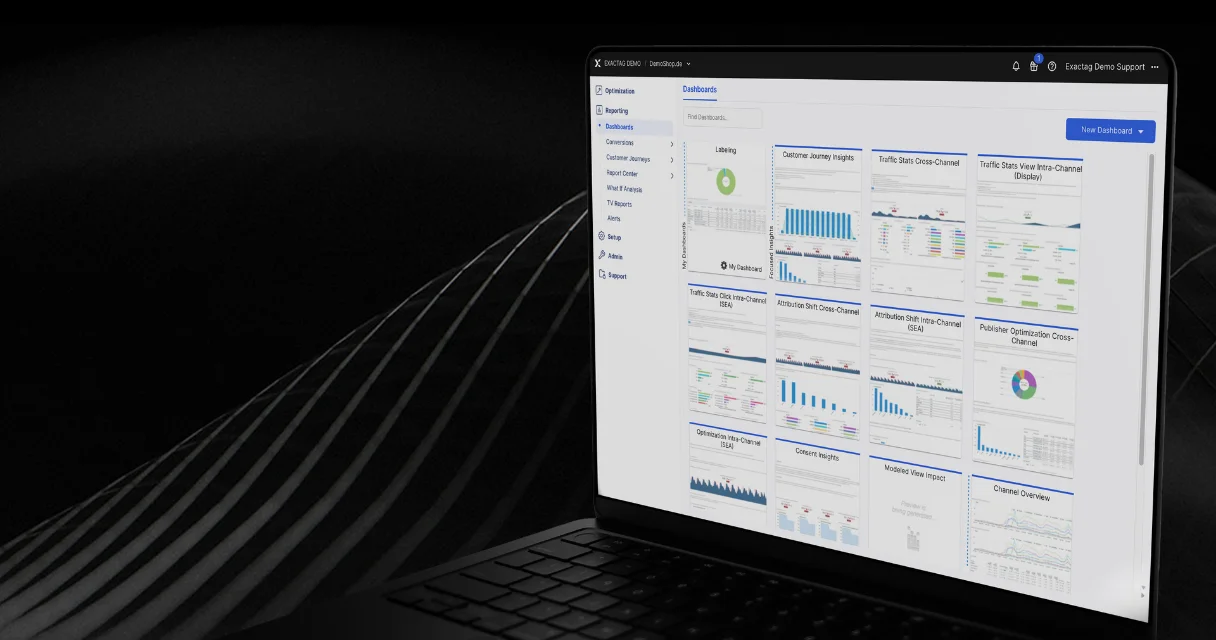
What we analysed:
To understand Black Week more clearly, we compared:
- sales and revenue trends during Black Week vs. surrounding weeks
- channel-level efficiency shifts, including ROAS and cost dynamics
- customer journey behaviour, such as touchpoints, sequence, and journey length
- what happens after Black Week ends, to detect baseline effects
Our goal was not to crown a “winning channel”, but to answer a more useful question:
What is Black Friday really doing: to customers, to channels, and to performance measurement?
1) Yes, Black Week still drives sales
Let’s start with what every marketer wants to know: Across datasets, we saw a clear uplift in revenue and sales during Black Week. The event still works: customers buy more, and the market is primed for conversion.
This matters because it confirms a basic truth that sometimes gets lost in the “Black Friday fatigue” discussion: Black Week is still one of the strongest commercial moments of the year.
However, once we looked beyond top-line revenue, the performance story became more nuanced and brought us to our second finding:
2) Efficiency changes, but not in one direction
When we compared Black Week performance to the surrounding non-Black Week periods, one pattern became very clear: Black Week does not improve performance across all channels in the same way.
Yes, sales and revenue increased overall, but channel efficiency told a much more differentiated story. In some channels, ROAS held steady even though media costs increased. In others, ROAS actually improved during Black Week, suggesting that these channels benefited more strongly from the higher purchase intent in the market. At the same time, we also saw channels where the opposite happened: costs rose, but ROAS declined, meaning that the additional sales came at a price.
This matters because Black Week can easily create a false sense of success. When conversions rise, it’s tempting to assume performance is automatically “working”. But more sales do not automatically mean better outcomes, especially if they come at a significantly higher cost.
In peak season, some teams optimize for efficiency, while others deliberately prioritize effectiveness: driving volume, gaining share, or reaching buyers they wouldn’t normally capture. Both approaches can be valid. The key is to understand the trade-off and the price tag.
That’s why cost monitoring during Black Week is central. The most useful question isn’t simply “Which channel drove the most sales?”, but: Which channels delivered growth at a sustainable cost, and which ones became disproportionately expensive under auction pressure?t.
3) Customer journeys got longer
At this point, we had already confirmed what most marketers recognise: sales go up, and performance becomes more expensive and more comple. When we looked at customer journey behaviour, we saw a surprising shift:
Customer journeys got longer during Black Week.
This was unexpected, because Black Friday is built on urgency. Discounts are strong, intent is high, and one would assume that decision-making speeds up. But the data showed the opposite: During Black Week, customers interacted with more touchpoints before converting. Instead of buying faster, they were more often exploring options, comparing offers, revisiting products multiple times, and moving between channels more frequently.
This suggests a behavioural shift, not just a media effect. Black Week creates more choice, because almost every competitor runs promotions at the same time. Customers are highly motivated, but also highly selective, and deal hunters tend to evaluate more, not less. Black Friday has become a window rather than a single moment, which encourages browsing and comparing over multiple days.
What longer journeys do to your reporting
- More touchpoints increase overlap across channels.
- Late-stage touchpoints appear more often and can look disproportionately strong.
- Without a journey context, it becomes easier to over-credit demand capture.
- The difference between “touching” and “driving” a conversion becomes more important.
- As overlap increases, channel self-attribution becomes even more misleading, because every platform can credibly claim the same conversion.
4) What happens after Black Week ends
There’s one more insight worth mentioning, we saw in the data after Black Week ended, because it completes the picture.
Across the datasets, sales didn’t simply return to “normal” once Black Friday was over. Instead, we observed a clear dip in sales immediately after the event. Interestingly, this dip did not persist for the rest of the season. Roughly one week later, sales started rising again as the market moved into the Christmas shopping period.
This post-Black-Friday pattern is important for one reason: it reminds us that Black Week does not exist in isolation. It sits inside a broader peak-season cycle where customer demand moves in waves, and where short-term spikes can be followed by short-term slowdowns before the next surge begins.
To understand what might be driving this behaviour, it helps to add one additional layer from Marketing Mix Modeling. In earlier MMM analyses (as discussed in our previous Black Friday article): we often see that a portion of the Black Week spike can be demand shift. In other words, customers move purchases forward into the discount window, stockpile, and then buy less afterwards. This does not happen in every category, but when it does, it creates exactly the pattern many retailers recognise: a strong uplift during Black Week followed by a noticeable baseline dip.
The key takeaway is not to treat the post-event dip as a “problem”. The takeaway is to measure it and include it in your evaluation window. If you only look at Black Week performance inside the promotional period, you cannot tell whether the spike created truly incremental demand or whether part of it was simply pulled forward from the weeks that followed.
What marketers can do with these insights in 2026
So what does all of this mean in practice? Based on what we observed, the most actionable recommendations are straightforward.
- Look beyond Black Friday Week. To understand whether Black Week created truly incremental growth, you need a wider view of the season. Ideally, analyse the full peak window from early November through December, because demand can shift both ways: some customers delay purchases in anticipation of discounts, while others pull purchases forward into Black Week and buy less immediately afterwards. Only by looking at the period before and after Black Week can you identify these baseline effects and avoid overestimating the true incremental lift.
- Treat Black Week as its own benchmark. It is not comparable to normal weeks because costs, behaviour, and journey structure shift.
- Compare Black Week vs. non-Black Week performance within each channel instead of trying to crown a universal winner.
- Don’t assume shorter journeys: plan for longer ones and interpret channel roles accordingly. As overlap increases, platform self-attribution becomes harder to trust, because multiple channels can credibly claim the same conversion.
Explore your Black Friday Insights
Black Friday remains one of the strongest commercial opportunities of the year. But what makes it truly valuable isn’t just the revenue spike, it is what the week reveals about customer behaviour, channel dynamics, and the hidden mechanics behind performance.
If you’re new to Exactag and curious how independent measurement and journey transparency can support your peak-season planning and performance steering, feel free to contact us. We would be happy to connect and discuss your use case.
If you’re an existing Exactag customer and would like to explore these insights in your own data (for example through a Black Week comparison, journey analysis, or a peak-season deep dive), reach out anytime. Our Customer Success team is happy to support you and answer any questions.